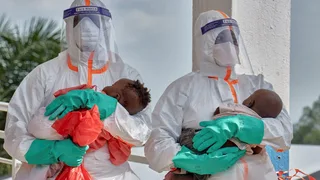
Ebola in the Democratic Republic of Congo: What's going on and why is the outbreak so alarming?
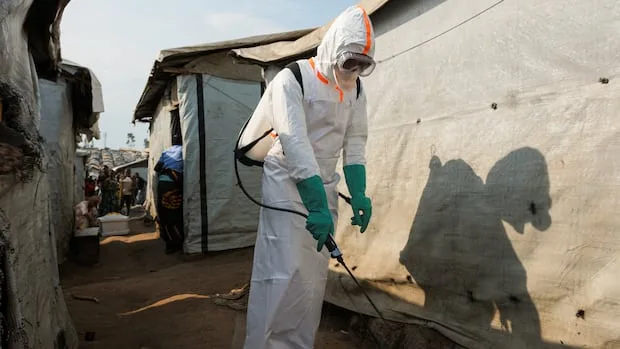
The Ebola outbreak in the Democratic Republic of Congo became the deadliest in the country’s history this week as confirmed cases continue to rise at a pace that is raising alarm around the world.
At least 2,378 deaths have been recorded in the D.R.C. as of Aug. 16, the country’s public health ministry said in its latest update on Tuesday.
"This is now the second-largest Ebola outbreak ever recorded, and it is moving faster than any previous Ebola outbreak. That's why I call it unprecedented speed," Tedros Adhanom Ghebreyesus, head of the World Health Organization (WHO), said on Tuesday .
"We must be frank: the epidemic is far from being under control. It had a big head start, and we are still playing catch-up."
Ebola is a serious disease linked to what's known as orthoebolaviruses.
There are different strains of orthoebolaviruses, including four that affect humans: Zaire, Sudan, Taï Forest and Bundibugyo. The Bundibugyo strain has been identified in the current outbreak, the D.R.C.'s 17th on record.
Humans can contract Ebola through close contact with the blood or bodily fluids of infected animals such as fruit bats or chimpanzees. It then passes between people when contact is made with the bodily fluids of someone who is sick or has died from Ebola, or with contaminated objects.
Formally declared in May, the outbreak has centred on the eastern D.R.C., near the border with South Sudan and Uganda. Uganda also identified cases but declared itself "Ebola free" in late July.
According to the WHO, the first suspected case was a health worker who had reported symptoms on April 24 and later died at a medical centre in Bunia, the capital of Ituri province.
The speed at which Ebola is spreading this time far eclipses previous outbreaks.
For example, 100 days after the first Ebola case was confirmed in the D.R.C. in 2018, 323 cases were reported, according to data cited by the U.S. Centers for Disease Control and Prevention (CDC). Similarly, 398 cases were reported in Guinea at the 100-day mark in 2014.
In the current outbreak, which has yet to reach the 100-day mark, 5,021 cases were reported in the D.R.C. as of Aug. 16, according to the country's public health ministry.
Cases have been confirmed in six D.R.C. provinces, but the vast majority of cases and deaths have been in Ituri. The ministry says the outbreak also has a case fatality rate of 47.4 per cent, and the United Nation's humanitarian aid chief Tom Fletcher said last week that a person is dying every 30 minutes.
The first is that there currently is no vaccine or treatment for the Bundibugyo strain of Ebola. (Two vaccine trials, including one in Canada , have begun, but it will likely take months before a wide-scale rollout.)
5News aggregated this summary from the outlet’s public feed. The full article, with all the context, is on www.cbc.ca — the content belongs to CBC World.