In the northern Appalachian Mountains, warmer weather is making alpine regions greener
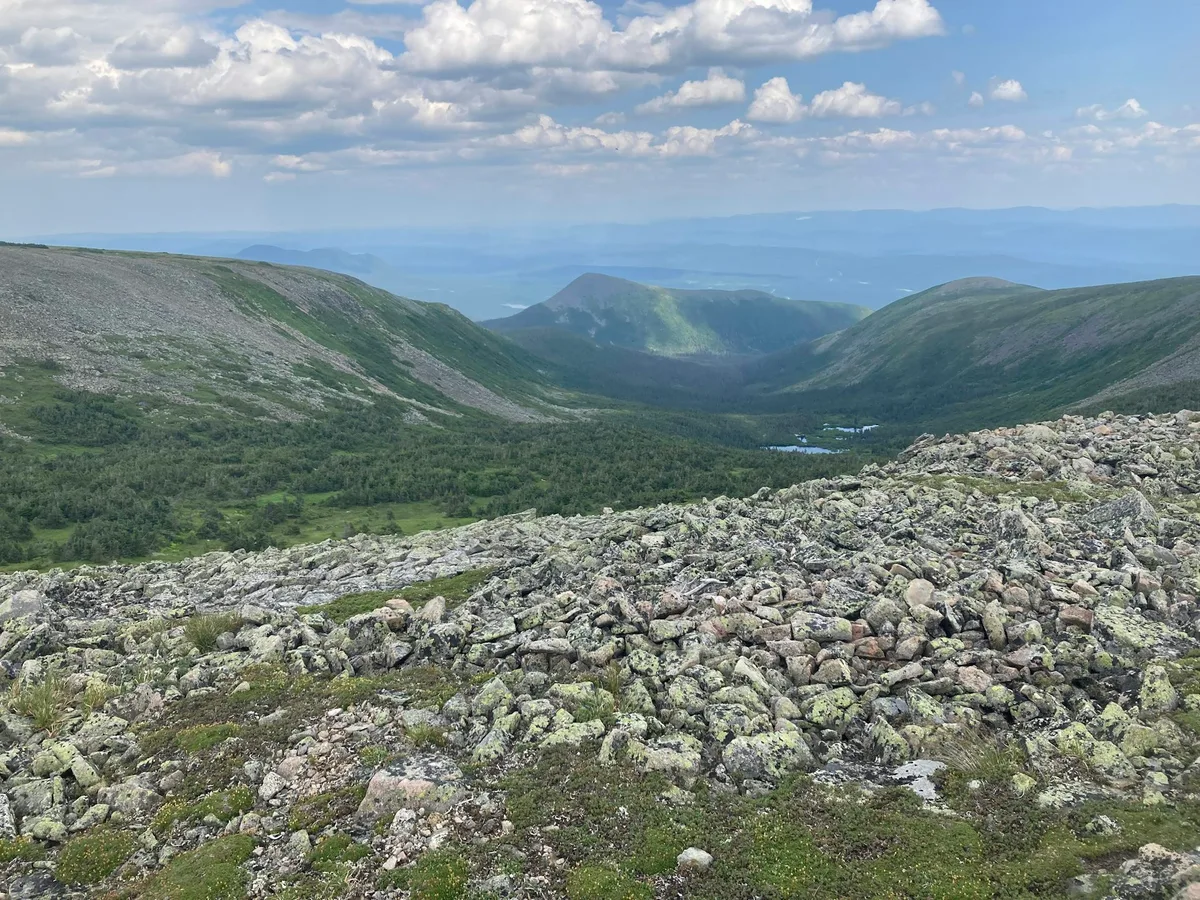
The alpine zone on Mount Jacques-Cartier in Québec’s Gaspé Peninsula. (Jonathan W.
Chipman) , CC BY-NC-ND If you visit Mount Jacques-Cartier in Québec’s Gaspésie National Park , you can expect to climb through a forest of spruce and fir trees along a trail lined with bunchberry flowers.
As you approach the peak, the trees get shorter and disappear at the alpine zone, where the climate is harsh and plants cling to the ground.
But this island in the sky — like dozens of other alpine summits in the northern Appalachians region — is changing.
Research by my colleagues and me , using 41 years of satellite imagery of mountains across the northeastern United States and Québec’s Gaspé Peninsula, shows that these mountains are slowly greening.
Why is this happening? And what does it mean for the future of the plants that live where the cold and wind are too extreme for trees to survive? Life in the northeastern alpine zone A map of the northern Appalachian region. (Jonathan W.
Chipman) , CC BY-NC-ND Scientists have been studying alpine plants in the northern Appalachians since the 1784 Belknap-Cutler expedition to Mount Washington in New Hampshire.
Later botanists such as M.L.
Fernald documented the exceptional plant diversity of Québec’s Chic-Chocs Mountains.
They found plants that can live where it’s cold, cloudy, rainy or snow-covered, and almost unimaginably windy.
At Petit Mont Sainte-Anne, gusts can reach up to 250 kilometres an hour .
Mount Washington famously recorded a 371 km/h wind in 1934 , and dangerously high winds are commonplace.
In winter, these winds pick up ice particles and blast them against any plants outside the shelter of a rock or snowdrift.
Plants on these mountains must be hardy, and some are found nowhere else on Earth .
5News aggregated this summary from the outlet’s public feed. The full article, with all the context, is on theconversation.com — the content belongs to The Conversation Canada.