Migrant Workers Face a Housing Crisis in This Summer of Fire

On Friday* night, Lorena Ordoñez got a call from migrant workers on a farm near Peachland, B.C. They had been ordered to evacuate, but their vehicle had broken down as they fled a fast-moving wildfire and they were trying to get out on foot.
Ordoñez, an intake manager with the Migrant Workers Centre, said she often helps out in emergency situations with Spanish-speaking workers, and she was able to call police to tell them where the workers were.
That group of farmworkers had to be rescued by police and other first responders; another group, near Summerland, had to be rescued by helicopter, Ordoñez said.
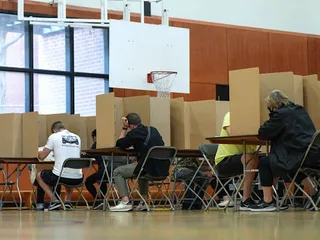
In total, 47 migrant workers who had come to B.C.’s Okanagan from Mexico to help bring in the fruit harvest ended up in emergency shelters for wildfire evacuees after Friday’s nerve-racking evacuation.
But that’s where the barriers often faced by migrant workers came into play. The workers were told they couldn’t stay more than two nights and three days because they’re not B.C. residents.
“From the get-go, it’s just a stressful situation,” Ordoñez said. “On top of being evacuated, you have to look for accommodations in such a short period of time, with limited resources and connections.”
Two days after publication of this story, the Ministry of Emergency Management and Climate Readiness gave The Tyee more information about how long evacuees can stay in emergency shelters. The ministry said migrant workers who live in B.C. are not treated any differently than other residents during emergency evacuations.
“Generally, 72-hour initial support is provided to all evacuees to help meet immediate needs and to give people time to access their insurance. Needs are then reassessed on an ongoing basis, and support is provided while evacuation orders remain in place,” ministry staff told The Tyee.
“Hotel rooms are available and the Penticton and West Kelowna group lodging sites are fully open and have capacity to house evacuees. These options are also available to migrant workers.”
Ordoñez said the farms that employ the workers are responsible for finding them alternative accommodations, and the workers have now been moved to other homes in Kelowna and Oliver. She said community members from Kelowna, as well as charitable groups, have stepped forward to support the workers with donated backpacks and other items.
The workers were able to grab their passports before fleeing but don’t have access to any other belongings.
Ordoñez said the charity that is running the emergency shelter in Kelowna, Samaritan’s Purse, has done a great job and treated the migrant workers with kindness — but shelter staff are bound by the rules set by the province.
Byron Cruz, a longtime migrant worker advocate who lives in Vancouver, said B.C.’s agricultural industry is dependent on the workers who travel from Mexico to B.C. every year. He called on the B.C. government to change the policy that limits migrant workers’ stays in emergency shelters.
“There should not be limitations on the time at all,” Cruz said. “They should be treated as locals with no difference.... This segregation doesn't help.”
5News aggregated this summary from the outlet’s public feed. The full article, with all the context, is on thetyee.ca — the content belongs to The Tyee.