Meta launches new AI model as Zuckerberg lays out vision for open-weight AI
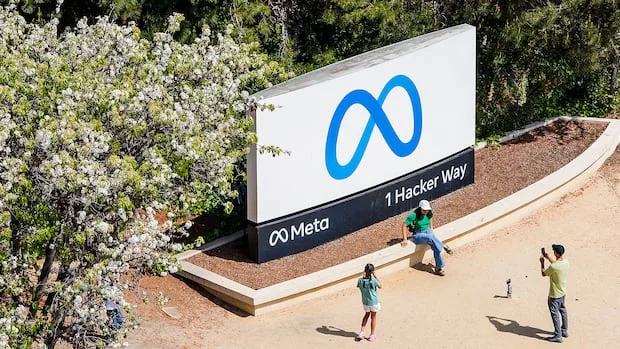
Meta Platforms CEO Mark Zuckerberg called for lower U.S. barriers on open-source AI to better compete with Chinese rivals as the social media giant released a smaller and more customizable model on Monday — saying more would follow soon.
The new model, Muse Glimmer, is smaller than leading AI models from rivals and is instead designed to run tasks on a Mac or PC with a single graphics card, aiming to tap demand for AI systems that run directly on people's devices.
"We've got even bigger models that are coming soon," Zuckerberg said in a video post accompanying a 14-page essay in which he championed spreading AI rather than leaving it in the hands of a few.
"The notion AI is so dangerous that the only safe path is an extreme concentration of power seems inherently problematic."
Zuckerberg's statement marks the latest show of support for open-weight AI, which is gaining traction as businesses grow wary of ballooning AI bills and worry about recent cybersecurity incidents involving models from Anthropic, OpenAI and Meta.
Open-weight models release their core components — known as weights — which means users can customize them for their own purposes, unlike closed models that companies keep fully under their control. They're also often much cheaper.
Those controls had come in the spotlight due to the recent release of high-profile Chinese open-weight models like Kimi K3, and after Hugging Face, the AI coding collaboration hacked by a rogue OpenAI model , used a Chinese open-weight model to defend against the attack because closed-source models couldn't properly identify the threat.
Meta was also one of the companies that signed an open letter in support of open-weight AI late last month, that also included high-profile signatories like Nvidia's Jensen Huang, Microsoft and Palantir.
Chinese startups have so far led the race for open-weight models, with Moonshot's Kimi K3, Alibaba's Qwen3.8-Max and DeepSeek's V4-Flash rivalling the performance of top U.S. systems. By contrast, the leading models from U.S. developers OpenAI, Anthropic and Alphabet's Google are closed weight.
Shares of Meta, which have fallen about 10 per cent so far this year, were up nearly 3 per cent in premarket trading on Monday.
Meta also plans to release the weights of Muse Spark 1.2, its most advanced model, built by a costly superintelligence team it formed last year to claw its way back into the AI race.
The company had long supported open models and was among the only U.S. tech firms to release such models before poor reception for its Llama 4 last year forced a change in strategy.
In Monday's wide-ranging AI essay, Zuckerberg also unveiled a new $1 billion US fund that aims to ease fears about the impact of its data-centre expansion by offering support to communities.
Growing local opposition to data centres has become a key election issue in the U.S. and one of the biggest hurdles for Big Tech's push to build the infrastructure needed to power AI.
5News aggregated this summary from the outlet’s public feed. The full article, with all the context, is on www.cbc.ca — the content belongs to CBC Business.