NASA is launching the Nancy Grace Roman Space Telescope. Here are just a few of the wonders it will reveal
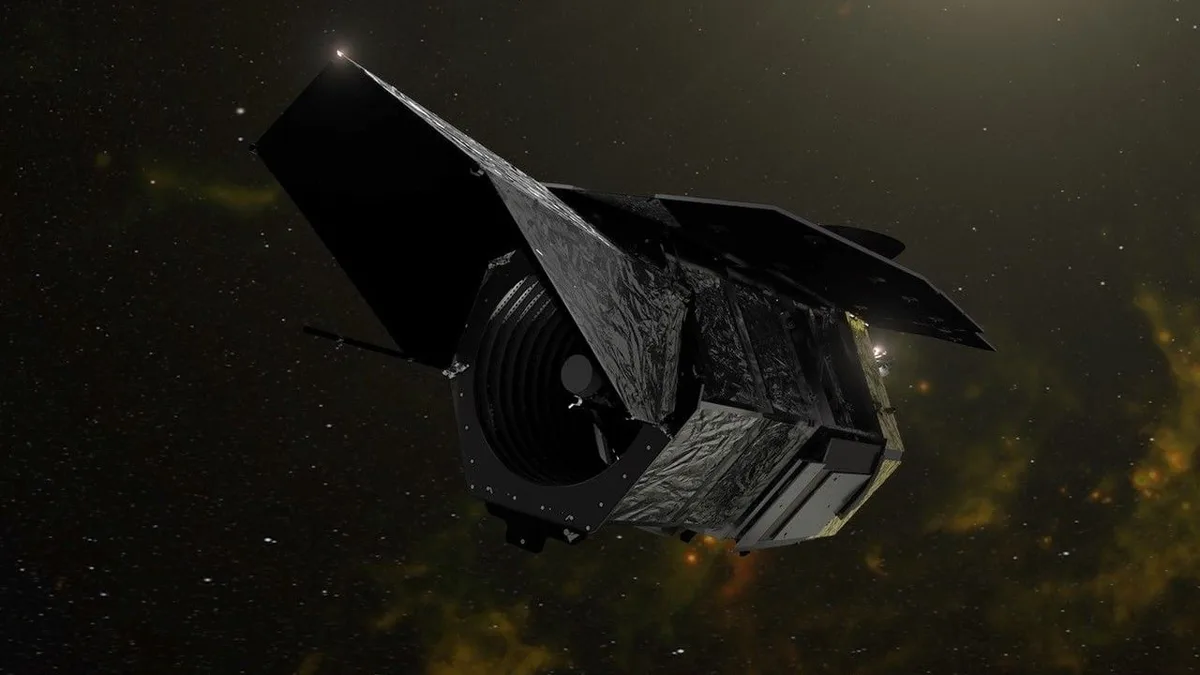
If all goes to plan, at 7:26 a.m. Sunday morning, a new space telescope will blast off from Cape Canaveral, Fla., on top of a Falcon Heavy rocket, ready to reveal new wonders about our universe.
The highly anticipated Nancy Grace Roman Space Telescope is named after NASA's first chief astronomer, also known as the "mother of the Hubble Space Telescope." Once launched, it will orbit 1.5 million kilometres away, at a point called L2 where gravitational forces balance to keep satellites in a steady orbit. It is a five-year mission, with the possibility of extension.
But why bother adding a new telescope to the arsenal of telescopes already in orbit, like the Hubble Space Telescope or the James Webb Space Telescope?
Because each telescope is equipped with different instruments, and Nancy Grace Roman is no different. While it has a mirror that is roughly 2.4 metres across, similar to Hubble, it also has a coronagraph that can block out starlight to reveal planets orbiting distant stars. It also has its Wide Field Instrument that is just as sensitive as Hubble's but has the ability to image an area 100 times larger. It's like going from looking through a pinhole to something the size of a golf ball.
Its camera will be able to resolve billions of stars, allowing for all different types of sky and stellar surveys.
So, what makes Nancy Grace Roman so special? Let's take a look at just some of the highly anticipated discoveries astronomers are hoping this telescope will make.
While we don't know of any other planets with life, astronomers are continuing to investigate other stellar systems to find out what makes our solar system so unique. Or perhaps it's not that unique.
To date, more than 6,300 exoplanets have been confirmed, mostly from the Kepler Space Telescope.
There are a few ways to look for exoplanets. The most popular is the transit method, where a telescope looks at a star for an extended period of time. If there's a planet that crosses — or transits — in front of it, the light of the star dips ever-so slightly. And that's what Nancy Grace Roman will do as well.
5News aggregated this summary from the outlet’s public feed. The full article, with all the context, is on www.cbc.ca — the content belongs to CBC News.