Climate change raised risk of Nepal flood: scientists
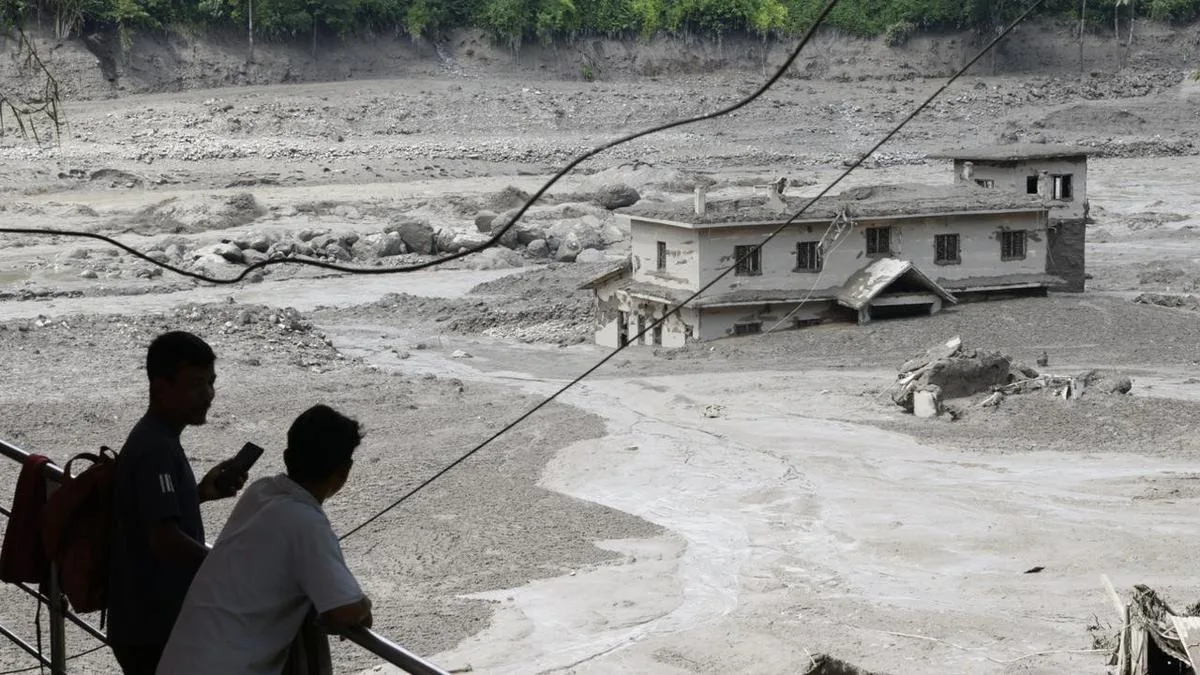
Climate change is leading to conditions that can destabilise high-mountain rock and ice, strengthening prospects for disasters such as this week's Himalayan flood along the border between Nepal and China's Tibet, scientists say.
At least 390 people have been killed and 1400 others are missing, authorities say, a day after a massive wall of mud and rock collapsed into a Himalayan river, sending catastrophic floods through towns and valleys.
"Climate change is generating conditions that can destabilise high-mountain rock and ice," said Simon Cox, chief scientist at the Mountains to Sea program at Earth Sciences New Zealand.
That in turn makes collapses and cascading hazards of the kind seen this week more frequent, he added.
While the exact cause of Wednesday's disaster is still being analysed, scientists say it probably began with a massive ice rock avalanche on the northern slopes of Nepal's Langtang Lirung peak into the Lhende Khola river on the Tibetan side.
At least six major hydropower plants and infrastructure at the Gyirong Port trade hub were damaged in a multi-stage hazard chain across borders triggered by the initial collapse.
It also altered river channels more than 100km downstream, near the Indian border.
While experts caution against describing climate change as the sole, immediate trigger for Wednesday's collapse, they say that rising temperatures and melting glaciers probably played a role in the disaster.
Warming can reduce ice support on steep slopes, boost meltwater, and change patterns of freezing, thawing and rainfall, which can weaken mountainsides and make large collapses more likely in some spots, Cox added.
Similar catastrophic surges have convulsed the region in recent years, but on a smaller scale.
These range from a 2025 flood at Gyirong on the Tibet-Nepal border to a glacial lake outburst in the Sherpa village of Thame in 2024, preceded by another in India's northeastern state of Sikkim in 2023.
Floods, landslides, avalanches, and droughts are increasing in frequency and ferocity across the Hindu Kush mountain range.
The accelerating changes to water, land and air pose a major threat to people in the region, the Nepal-based International Centre for Integrated Mountain Development says.
Rising mountain temperatures make the cryosphere, or the ice-clad part of the earth's surface, far more vulnerable than in the past, said Farooq Azam, senior cryosphere specialist at ICIMOD.
5News aggregated this summary from the outlet’s public feed. The full article, with all the context, is on www.perthnow.com.au — the content belongs to PerthNow.