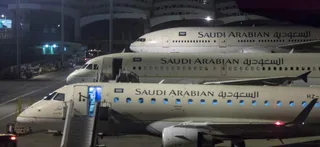
How are Yemen's Houthis attacking Saudi Arabia so effectively?
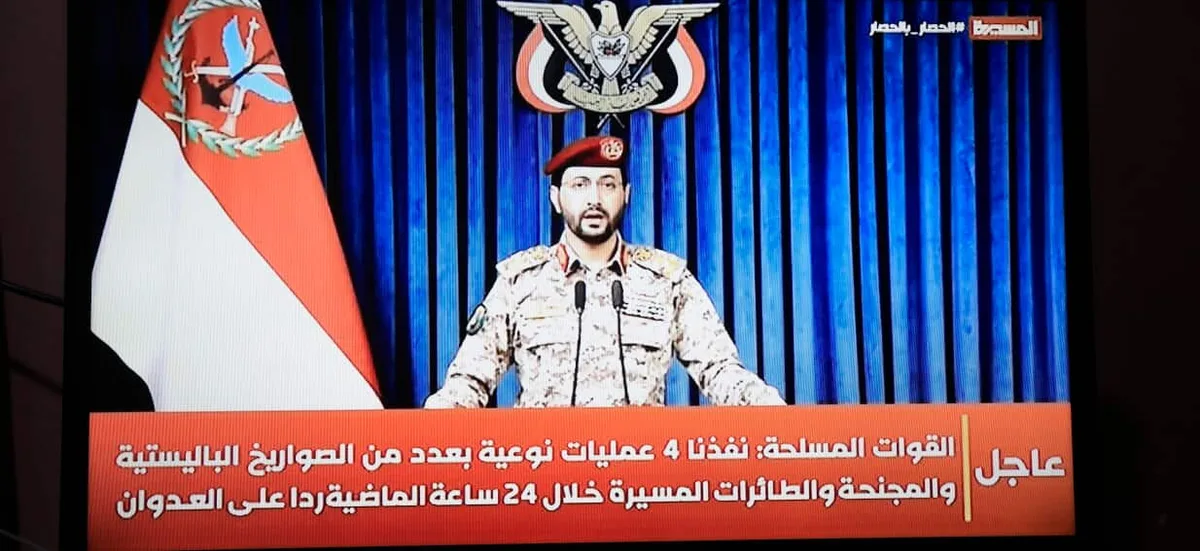
Houthi militants who control northwestern Yemen have in the past week attacked Riyadh international airport and hit the headquarters of Saudi Aramco, the world's largest oil company.
The air assaults that have laid bare Saudi Arabia's vulnerability to threats from its enemy next door.
The attacks are shattering the illusion of Saudi Arabia as a safe international investment hub as it tries to attract foreign money and diversify away from oil.
This nightmare scenario for a key United States ally in the Gulf has been years in the making, weapons and regional experts say.
They attribute Saudi Arabia's vulnerability to a ragtag group of Yemeni fighters to a perfect storm of factors.
Your trusted source for staying up-to-date with the world around you. Get free daily news updates and analysis, straight to your inbox.
These include Iran helping the Houthis reach near self-sufficiency in producing and deploying advanced weapons, and the impact of the US war on Iran that has depleted stocks of interceptors.
Iran has been giving weapons, money and training to the Houthis, known formally as Ansar Allah, for more than a decade, although it has officially denied arming the Houthis in violation of a United Nations arms embargo.
While Iran has come under its own financial and military strains due to war and sanctions, the Houthis have learned — with Iranian help — how to assemble their own weapons, including drones and missiles, the experts interviewed by Reuters said.
Iran's Revolutionary Guards and members of Iran's other ally, Lebanese Hezbollah, initially gave the Houthis knowledge of missile systems and their operation, said Andreas Krieg, senior security studies lecturer at King's College London.
"Former Yemeni military engineers and a growing generation of locally trained specialists have helped institutionalise these capabilities," he said.
"Tehran has not simply supplied the Houthis with weapons. It has helped create an indigenous military-industrial learning process that becomes progressively harder to dismantle, even if direct Iranian supply routes are disrupted."
Iranian analysts said that the Houthis have in this way become one of the most cost-effective and valuable military proxies of Iran.
"The Revolutionary Guards were forward-looking. They looked at what happened if the Houthis couldn't receive equipment or weapons directly (from Iran), or if these were seized by US-allied forces," said Hamid Nikou, a former political advisor to Iran's Islamic Revolutionary Guard Corps.
5News aggregated this summary from the outlet’s public feed. The full article, with all the context, is on www.sbs.com.au — the content belongs to SBS News - Latest.