Thursday 15 October 2026 SourcesAbout🌓
🇦🇺 AU ▾
BREAKING
› First Harry, Meghan joint appearances since UK return› Australia v New Zealand: men’s Rugby League World Cup – live› Telethon 2026: Red Carpet rollout at Perth Airport as Channel 7 stars touch down for fundraising marathon› Rugby League World Cup live updates: Australia v New Zealand battle for first night honours› Range Rover recalls 94 luxury SUVs in Australia over potentially fatal crash defect› McLean scores freakish try for Kiwis› Elon Musk suggests US government was behind Starlink restrictions in Ukraine – Europe live› Tambi the giraffe arrives at Perth Zoo from Melbourne Zoo as part of breeding program› Brisbane man dies at home after waiting two hours for ambulance as Queensland Ambulance Service faces mounting pressure› European football leaders confident of finding candidate to stand against Infantino› First Harry, Meghan joint appearances since UK return› Australia v New Zealand: men’s Rugby League World Cup – live› Telethon 2026: Red Carpet rollout at Perth Airport as Channel 7 stars touch down for fundraising marathon› Rugby League World Cup live updates: Australia v New Zealand battle for first night honours› Range Rover recalls 94 luxury SUVs in Australia over potentially fatal crash defect› McLean scores freakish try for Kiwis› Elon Musk suggests US government was behind Starlink restrictions in Ukraine – Europe live› Tambi the giraffe arrives at Perth Zoo from Melbourne Zoo as part of breeding program› Brisbane man dies at home after waiting two hours for ambulance as Queensland Ambulance Service faces mounting pressure› European football leaders confident of finding candidate to stand against Infantino
Science

Conservation parks don’t have to be vast – as one tiny grasshopper reminds us
The Conversation Australia ·
Conservation parks don’t have to be vast – as one tiny grasshopper reminds us

Michael Kearney A vast stretch of land where animals roam widely and plants grow freely.

That’s what most people would picture if they thought of a conservation area.

Such places are vital for protecting large animals and entire ecosystems.

They make managing environmental threats , such as fire and weed invasions, much easier.

However, some parts of Australia simply don’t have the space to support a large conservation area.

This is particularly true in agricultural regions .

In the cropping country of northwestern Victoria, for example, remnant reserves may only cover less than 100 hectares.

These smaller reserves are often undervalued and overlooked .

However, our latest research reveals these remnant areas can be critical to the survival of smaller plants and animals.

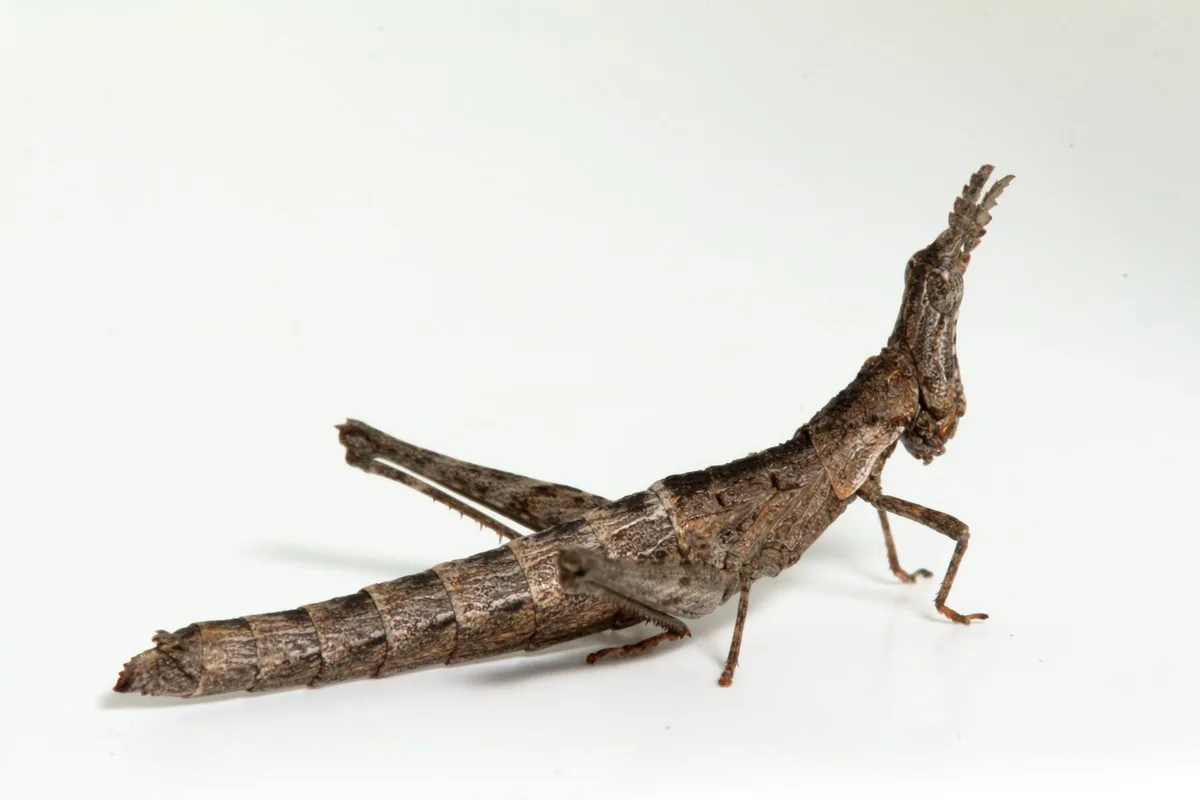
Meet the matchstick grasshopper Our recent study took a closer look at grasshoppers in western Victoria.

We rediscovered a formerly undescribed species of the Keyacris genus of grasshoppers, which includes the threatened Key’s matchstick .

We named the new species as the Murray Mallee matchstick ( Keyacris bungunnia ) because it lives around the region where an old megalake, Lake Bungunnia , existed during the Pleistocene era.

The Murray Mallee matchstick likely hopped about on its shores.

Matchstick grasshoppers, named for their distinctive stick-like appearance, are unique to Australia .

Read the full article on The Conversation Australia ›

5News aggregated this summary from the outlet’s public feed. The full article, with all the context, is on theconversation.com — the content belongs to The Conversation Australia.

More from The Conversation Australia

See all ›

More in Science

See all ›