What my father Bruce taught me, and why I’ll always stare at fish
You've used all of your gift articles. 3 more will become available on the 1st of every month.
Last week I returned to the University of Sydney to accept an honorary doctorate. It was wonderful to be back at a place that shaped my life and the lives of my family; where I’d spent the best part of a decade studying arts, and some law, and then diving into history to write a PhD that took a ridiculously long time and caused clumps of my hair to fall out. History, like careers, like human lives, never operates in a straight line. It gets knocked out of shape by events, like all of us, like the human heart.
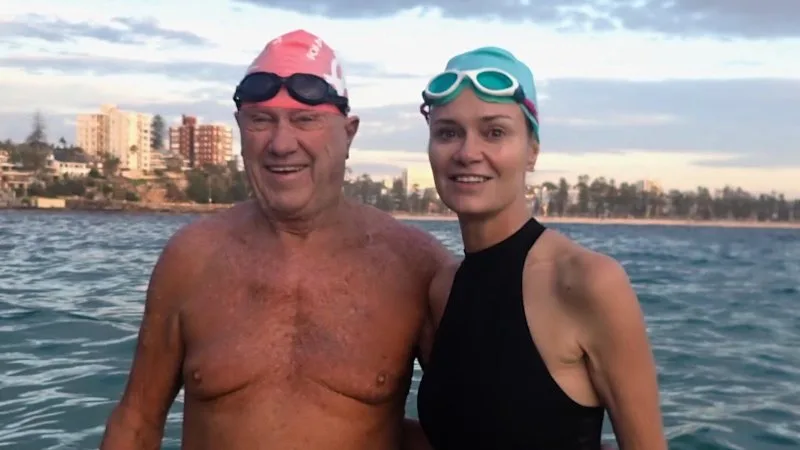
On that day my heart was particularly dented because that place was also where my father, alongside my mother, studied arts in the ’60s. He went on to live a big life of public service, humanity and adventure. He died suddenly, before I was due to speak at the university , and I thought about not going. But I was there because he would have wanted me there, along with my family – mainly because he loved attention and fancy hats and would have been horrified at the prospect of my forgoing either on his account.
Dad always said Mum was the great scholar, not him. Which may be fair. But he was a great human. And he paid attention, especially to the things that aren’t written down, that aren’t on the syllabus.
He taught me to push forward in the surf, to enter the ocean every day no matter your mood or workload, no matter the colour of the skies, the size of the waves (within reason), to dive in and just try, to give it a crack.
When you find people who believe in you, don’t take them for granted. Keep them by your side.
I’ve worked most of my life as a journalist but history is the first great love of my life. History has sneaked me into the best places, like a friend who knows the bouncer (hang on to those people, too, by the way).
History has taken me to secret archives in Windsor Castle, diaries hidden in attics in Scotland, a job in New York, a fellowship in Boston, and a career in journalism.
Journalism and history are closely related; the former is the messy first draft of the latter. Neither of them is ever perfect. Both require constant revision, vigilance, revisitation. And both require attention. Most importantly, attention to detail. Accuracy is everything for journalists. And for historians, for whom the challenge is not just to notice and record what’s there but also what’s missing.
One of my favourite historians, David McCullough , has four words pinned above his computer in his writing shack in Martha’s Vineyard: “Look at the fish”. This comes from Louis Agassiz , the 19th-century Harvard naturalist, who would give every new student the same test. He’d pluck a smelly fish out of a jar and tell them to just look at it. Many stared at it for days. One of them wrote that after several days of despair he realised what he had not seen, and what was unique. Excitedly, he said to Agassiz, “It has paired organs, one on either side!”
“OK,” said the student, “what now?” Agassiz said: “Look at the fish.” Some spent months doing this.
The reason I love this story is because it underlines the power of true attention.
5News aggregated this summary from the outlet’s public feed. The full article, with all the context, is on www.brisbanetimes.com.au — the content belongs to Brisbane Times.