Why this little-known meteor shower is one to watch this week
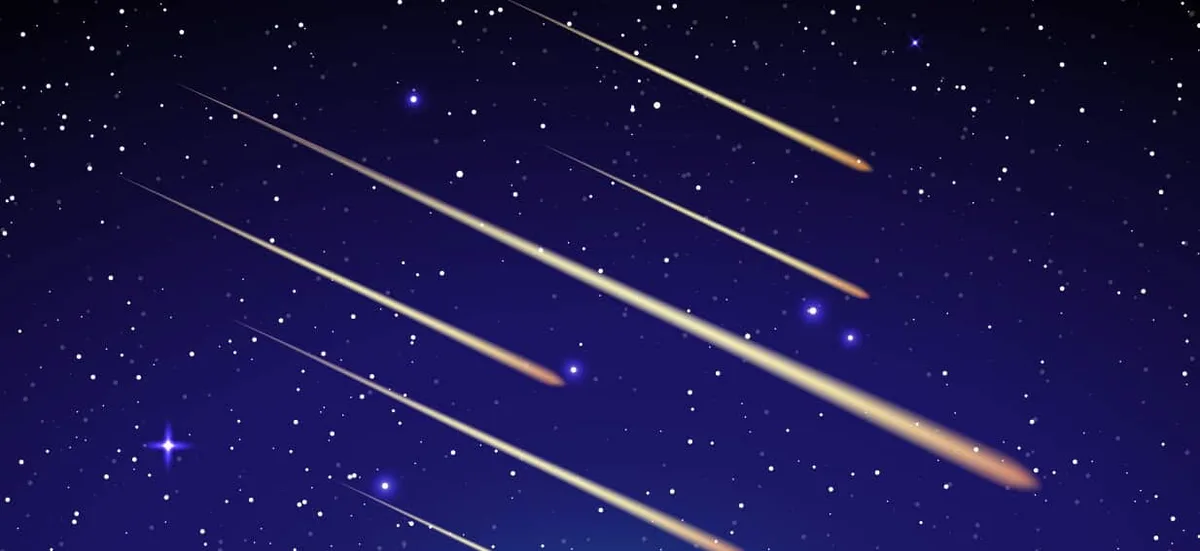
A minor meteor shower will streak across the skies this week as Earth passes through debris left behind by a comet that takes about 2,000 years to orbit the sun.
The Aurigid meteor shower will remain active until 5 September, with activity expected to peak on the night of 31 August to 1 September.
According to experts, the Aurigids are not as prolific as better-known meteor showers such as the Perseids or Orionids, but are notable for the speed of their meteors — and their connection to the long-period comet C/1911 N1, known as Kiess.
For Australian stargazers, however, this year's shower will be a difficult one to spot.
Your trusted source for staying up-to-date with the world around you. Get free daily news updates and analysis, straight to your inbox.
Meteor showers occur when Earth passes through streams of dust and debris left behind by comets or asteroids as they travel around the sun.
As a comet approaches the sun, heat causes material from its icy nucleus to escape, leaving dust and rocky particles along its orbit.
When Earth crosses one of these debris trails, the particles enter our atmosphere at high speed and burn up, producing the streaks of light we see as meteors.
Andrew Tomkins, a professor at the School of Earth, Atmosphere and Environment at Monash University, told SBS News: "You can think of it as dirty snowballs."
The Aurigids are associated with Kiess, a long-period comet whose orbit takes it far beyond the planets of our solar system, named after astronomer Carl Clarence Kiess, who discovered it.
There are two broad groups of comets: short-period comets which take fewer than 200 years to orbit the sun, and long-period comets which take more than 200 years.
Short-period comets are generally thought to originate in the Kuiper belt beyond Neptune, while long-period comets are associated with the distant Oort Cloud.
Tomkins described the Oort Cloud as a "giant spherical shell of objects".
He said the Oort Cloud is so distant that spacecraft such as the Voyager missions have not travelled through it. Scientists have inferred its existence from the behaviour and origins of long-period comets.
5News aggregated this summary from the outlet’s public feed. The full article, with all the context, is on www.sbs.com.au — the content belongs to SBS News - Latest.