Why are there so many plants? New research reveals two key phases in Earth’s past
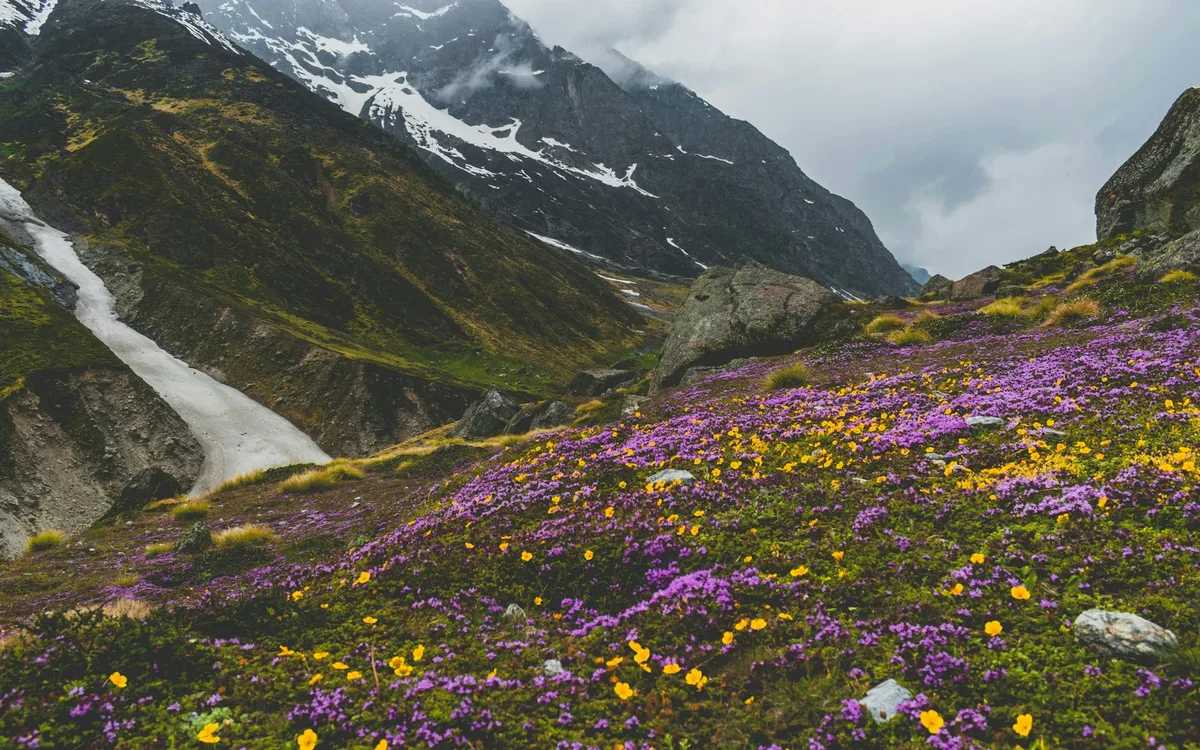
Chirag Saini/Unsplash Plants are crucial for life on land.
The energy they capture from the Sun underpins the existence of almost all land-based animals, fungi and bacteria.
In particular, flowering plants – the most productive and diverse group of land plants – dominate most ecosystems on Earth.
There are at least 350,000 species , and they’re vital for capturing carbon dioxide from the air.
Over millions of years, flowering plants have evolved complex relationships with animals , fungi and bacteria .
This created vast numbers of species, each specialising in eating, pollinating, dispersing seeds and decomposing different plants or in different ways.
It’s not clear how flowering plants came to rule the world.
In the middle of the Cretaceous Period, during “ peak dinosaur ” time (about 100 million years ago), flowering plants began to displace older plant groups that had dominated the land for 200 million years before.
Did a warmer climate play a role? The Cretaceous was certainly often much warmer than today.
But when researchers look at plant fossils, we can see that new, diverse plant types emerged during both warm and cool climates in the past.
Our new study, published in Nature Plants , examined fossilised pollen and spores, revealing that the two warmest times over the last 140 million years were indeed central to plant evolution – and not just flowering plants.
Fossil records are biased Until now, a clear link between climate and plant diversity has been elusive, mainly because fossil records are strongly biased.
The number of available fossils varies over geological time and between regions.
Because of this, simply counting fossilised species found in a given place can give a misleading sense of diversity over evolutionary time.
5News aggregated this summary from the outlet’s public feed. The full article, with all the context, is on theconversation.com — the content belongs to The Conversation Australia.